Showing posts with label technology. Show all posts

Thursday, 8 December 2016

ethical shopping made easy

Hey! You up there. My North American friends - this post is especially for you!

Those of us down here in Australia have been enjoying the Good On You app for over a year now, and I can't even begin to explain how much easier it has made shopping for clothing. The Good On You team has been overwhelmed with positive feedback from Australian shoppers, and CEO Gordon Renouf further shared that, "Since we launched in Australia people all over the world have been asking when our app will be available in their country."

Well, you lucky North Americans - now it's your turn.
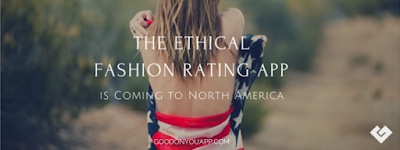
https://www.indiegogo.com/projects/bring-the-good-on-you-app-to-north-america-animals-fashion#/


Say you're out and about and see a gorgeous dress but aren't sure what that label's environmental policy is like - type it into the app and see how they rate.

Or you (or your fella!) are on the hunt for some work attire but you're not sure which brand has stronger labor guidelines to protect garment workers - browse by 'suits' or 'pants' or 'shoes' and see which brands rank highest. The app will even tell you the nearest locations to buy the clothes.

Or maybe you're just curious about the latest news in sustainable fashion - have a read through the articles available on the app.

You're able to dive into greater detail for each brand included in the app to see how they rate on labor, environment and animal welfare, and a brief descriptions on what aspects the brands are doing well, where they can improve, and how Good On You came up with their final ranking.


And - one of my favourite features - you can send your own comments and feedback direct to the brands through the app. Whether it's to thank them for their commitment, urge them to do better, or to ask a specific question, the app makes it easy for you to contact 1000s of brands at the touch of a button.

Sounds too good to be true? Well it's not. But they do need a little help to get things started, and that's where you come in.

Head over to their IndieGoGo page to help fund the launch of the app in your neck of the woods (and also catch a glimpse of me in their crowdfunding video!).  For as little as $5 you can contribute to the app, and with 'perks' ranging from sustainable socks, leggings, shoes and blouses to a workshop with CEO (and ethical fashion and consumer genius) Gordon Renouf, there are winners all around.
 
Check it out now and let me know what you think!
xxLisa

Sunday, 14 August 2016

woman versus machine

Earlier this year the World Economic Forum released a report to help us prepare for the Fourth Industrial Revolution, marked by "development in genetics, artificial intelligence, robotics, nanotechnology, 3D printing and biotechnology". 

The future is here!

So I suppose it shouldn't have come as a surprise to hear a story on Planet Money (I adore podcasts, lifesavers for my long commutes) titled "The Sewing Robot", talking about SoftWear, the company that may have created automating sewing.

No human required.
Image copyright SoftWear Automation

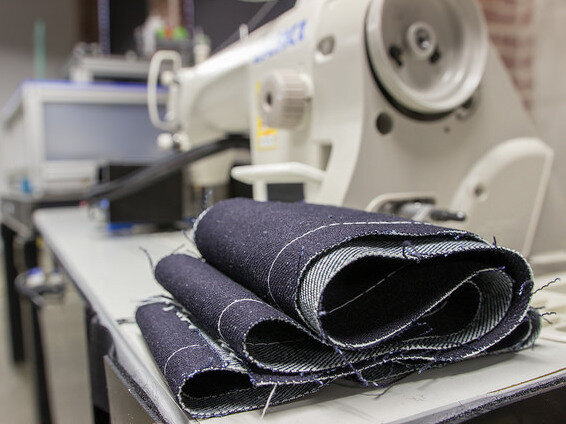
Machines have taken over manufacturing jobs since the first Industrial Revolution, including the fashion industry with the introduction of mechanised looms replacing the labour-intensive practice of weaving textiles by hand. However, the actual sewing together of garments has remained in the hands of skilled people - machinists - who sew each and every garment we wear today. All the seams, all the zippers, all the buttons and button holes, all touched by human hands.

It makes sense when you think about it - fabric is flimsy, soft, slippery and flexible, it can easily become bunched up or shift position on the machine, even when the most skilled hands are involved. How can machines ever compare with the quick-thinking and reactive hands of a talented sewer? That's exactly what SoftWear is trying to figure out.

I'll let you listen to the podcast yourself to hear all the details, but this story raised so many questions in my mind about what this would mean for the fashion industry and for our relationship with clothing, I just had to write about it.

Of course I know technology creates wonderful advances (hello Blogger!), but there is no hiding from the fact that when robots move into factories, humans move out.

Though it is incredibly hard to track the exact figure, there is an estimated 58 million people employed in apparel and textile manufacturing. Most of them are women, and most of them are located in developing countries. Garment manufacturing is one of the easiest businesses to begin due to the low cost of entry, and is one of the primary industries found in counties in the early stages of development. It's hard to know exactly what jobs will replace the hands-on work of sewing in these regions with little availability for re- or up-skilling should machines truly take over this role.

Image copyright ALAS

Also, I love knowing that my clothing was made by people. For years I didn't pay much attention to the 'Made In' tags on my clothes, but I do now, and I know that real people sewed my clothing. And because of my commitment to sustainable and ethical fashion, I'm starting to get a clearer picture of who these people are. Labels like Carlie Ballard, ALAS, Cloth & Co, Threads of Peru, and IOU all provide incredible detail about who made their fashion, and Fashion Revolution has opened up the doors to factories sewing global fashion brands through the #WhoMadeMyClothes campaign.

Some of the talented women making Carlie Ballard pieces.

In this age of blossoming radical transparency from fashion brands, I don't know that I'm ready to say goodbye to the personal touch of hand sewn garments. I'm just beginning to understand and make connections. And surely there is something lost when a machine takes over an artisan skills like handweaving?

Me wearing my stunning - handwoven - Threads of Peru scarf

Does this make me a luddite? Pining for a romantic past that was never really was? Or too optimistic, thinking we can make affordable clothing that is safe and respectful for workers around the world?

Should we embrace technology, knowing that at last no one is being harmed or treated unfairly to make our clothing? Or should we fight to keep some traditions even if it means (gasp!) inefficiencies and lower productivity than a machine would enable?

What do you think?

And just because it's a beautiful reminder that, at least for now, many people's hands make our clothing, enjoy (re)watching this short clip c/o EcoAge, Handprint.

Wednesday, 29 June 2016

are you a 1 million women woman?

As many of you already know, I'm a huge fan of the climate advocacy non-profit group 1 Million Women.

I write about my experience volunteering with 1 Million Women at the Easter Show in Sustainability with Style (and being somewhat starstruck by their inspiring founder, Natalie Isaacs). And last year I helped host a successful clothes swap on their behalf in Sydney's Northern Beaches.

Now they are expanding their reach even further with the development of an app to help women plan their eco-lives and track their carbon reduction commitments.


With an estimated 17% of all global carbon pollution emissions coming from our homes, changes to some everyday activities are essential to solving the climate crisis. As such, the app will focus on everyday carbon-cutting activities including: 
  • home energy savings and clean energy options
  • minimising food waste
  • reducing over-consumption
  • wise investing and divesting of your money
  • sustainable fashion and food choices
  • low-impact travel.

My favourite feature of the app is that it makes it easy for you to track how much carbon pollution you’ve individually saved. 

I love this concept! Now I'll know just how much of an impact I have every time I choose a veggie burger over a beef burger, or make a sustainable fashion purchase (or non-purchase), or use up all the food in my fridge.


In order to make this app a reality, 1MW are running a crowdfunding campaign through Tuesday 7 July. And the really great news is they've already reached their target goal - awesome! There is no doubt in my mind that the climate movement is a movement of the people.

There is still the opportunity to help them reach their stretch goal to make the app as great as it can be (and anyone who's ever commissioned a tech project knows the likelihood of a budget blow out). So just head over to their Start Some Good page and make a contribution. Depending on your commitment, you can get a profile on their blog, a Facebook shoutout, or an invite to the launch party.

The app will be available later this year to women (and men, and children) around the globe.

Friday, 8 April 2016

fashion and the sharing economy : part two

A few weeks ago I wrote about the benefits of sharing clothes - we get to wear beautiful things, we extend the useful life of garments, it's a win-win for the planet and fashion lovers.

I was given the opportunity to trial the dress rental service from GlamCorner, including renting a dress and ordering a back-up in case my preferred dress didn't fit. I was thrilled to get to wear something 'new' to the opening night of Swan Lake, and poured over the pages of dresses to find the perfect one (or two, as it were).

I love the Opera House!


If you're thinking this dress looks a little different to what I posted before, you'd be right. This is neither of the two dresses I had initially selected. And because I always want to be honest with you, my readers, about the ups and downs of living a sustainable lifestyle, I need to fill you in on what happened.

I love the idea of designer dress rental and have successfully rented in the past. But in all honestly, GlamCorner has some wrinkles to iron out in order to make this a smoother process.

Long story short, the dresses I had carefully selected weeks ago did not get returned to GlamCorner in time for for my event. According to GC, the Easter long weekend and rural location of the customer(s) who had the dresses before me led to delays. In order to make things right GC offered to send me three dresses via their same day delivery service and I chose the above (lovely) dress by Grace & Hart.

I did enjoy wearing this dress - both for the beautiful style, including unique geometric lace detail, and the allure of wearing something new - but I'd be lying if I said it was exactly what I'd envisioned or that I was happy with the overall experience.

Here you can see the great detailing of the lace overlay, and I loved
the slit sleeves as well.

Of course I understand accidents happen, and any sharing-economy business relies upon all the sharers returning items on schedule and all systems working flawlessly. However, Easter comes every year and can be easily accounted for in scheduling. Furthermore, I'm not sure GC would have let me know what was happening had I not contacted them the day my dresses were due to arrive (two days before the event) to ensure everything was on track.

Like many of you, my days are filled with many competing commitments and I was frustrated to have to spend more time looking through the website to find dresses suitable for the event, my body type and my personal style, after I'd already dedicated time to do this a few weeks past.  GC offered to pull dresses for me when I expressed my frustration, but fashion is an extremely personal experience for me, so I managed to squeeze in a quick 30 minute search to make sure I selected dresses that were 'me'.  Because I was searching dresses that were available immediately, the selection was smaller than before - good news for my schedule squeeze, but many of the brands I would have chosen were unavailable.

I've been joking this week with friends that this was a 'First World Problem', but on reflection, it's really not that trivial.

Markets and economies must shift if we're to manage the climate crisis and other global issues concerning the environment, poverty and inequality. I greatly value businesses working in the sharing economy, like GlamCorner, and other creative and disruptive business models, because it's only through trial and error and being brave enough to launch a new type of business that the necessary broader changes will occur.

So, was it a perfect experience? No.

Did GlamCorner try it's best to make the situation right? Yes.

Will I rent dresses in the future? Absolutely. Even from GlamCorner.

And at the end of the day, I still got to wear a beautiful dress to the opening night of Swan Lake at the Opera House.

* * * *

Have you had similar experiences with sharing economy or otherwise 'disruptive' businesses? I'd love to hear about it.

Also, thanks a million to my ballet date and 'photographer' on the night, my dear friend Erica. xx

Friday, 18 March 2016

fashion and the sharing economy : part one


It doesn't take much to encourage me to wear beautiful clothes - and a ticket to opening night of Swan Lake at the Opera House was all the excuse I needed to start dreaming of designer dresses.

The dancers will be bringing their A-game - why shouldn't I?


Of course, I can't always afford to buy the exact pieces I covet. And more importantly, I don't want to over-buy fashion and end up with a wardrobe full of beauties I've only worn once. A 2015 survey found that women wore clothing items an average of 7 times before throwing them away, and that after 3 wears most items are no longer considered 'new'.

Dresses are the worst offenders, with most bought for a 'one-off' event. I can totally understand why this might happen - I know that sometimes after I've achieved the 'wow' factor on the first wear of a new dress it somehow loses it's luster. So if we can extend the life of dresses and still keep the excitement, it can only be a good thing, right?

Enter the sharing economy and designer dress rental - the best win-win for the planet, my pocketbook and my love of beautiful clothing.

Sharing the love
While sharing amongst friends is fabulous, there is something about wearing a dress that none of your friends have seen. And for fashion lovers like myself, the opportunity to don a stunning piece of wearable art that I typically could not afford is oh-so-tempting.

Fashion sharing websites have been around for awhile, and I've rented dresses before with great success. So it was pure serendipity that brought GlamCorner to my attention just as I was starting to consider where to rent a dress for Swan Lake.


GlamCorner has over 1,000 dresses from more than 60 designer labels available for rental within Australia.

1,000 dresses!!!

There are beauties from Diane Von Furstenberg, Alex Perry, Manning Cartel, Carla Zampatti, Badgley Mischka and more.


The owners of GlamCorner tell me that each dress is rented an average of 10 times - that means these gorgeous gowns that may have only been worn once or twice by a solo owner are actually getting used, seeing the light of day, being enjoyed, and not going straight from one wear to a charity bin or the landfill.

And when 10 different people are enjoying the same item, the environmental footprint of creating the garment gets smaller and smaller.

How does it work?
I hear what you're thinking - how do you know if it will fit? What will it look like it on my body?

GlamCorner provides very specific style and fit comments about each dress. For example, "This dress runs true to size, however there is not a lot of give in the bust. We recommend it for women with medium-to-smaller cup sizes." Thank you for the specificity! There are also suggestions about the best undergarments to wear with each dress, and style tips regarding shoe colour and accessories.

The website offers a range of sizes from 6 to 20 - it's wonderful to see a fashion company that understands that fashion-loving bodies come in a range of shapes and sizes.

Nervous about 'shopping' online? Don't be.
Customers also have a few options to help us feel confident about selecting a dress online.
  • Try before you rent - obligation-free option to try 2 dresses for $30
  • Order a back up dress - select a second dress for the same date for $15
  • Fit guarantee - if the dress you selected doesn't fit, exchange for another size or request a refund

I would have loved to 'try before I rented', but I took too long deciding what I wanted to wear and my preferred dresses are rented out between now and the ballet (hopefully at some other fabulous events!). My advice if you prefer to try something on would be to plan ahead to make sure you allow enough time. You can book dresses up to 6 months in advance.

Instead I've ordered a back up dress. This means that two dresses will be delivered to me to try and wear, and I'm optimistic that one of them will work.

Here are the two I've chosen . . .

Manning Cartel (Ethical Clothing Australia certified)

Yeojin Bae


Lace is clearly a trend at the moment, and I found myself drawn to both of these stunners in dark blue and navy hues.

I have shoes that will go with either dress, and the length on both is great for the ballet (sitting in a short dress is never that comfortable).  I find the geometric cut and lace-design on the Manning Cartel, and the interesting boho-luxe flare of the Yeojin Bae, are both really interesting takes on the lace trend. Fingers crossed one fits! (Because if both fit, I don't know how I'll choose. . .)

I'll let you know which I select and send pics from the Opera House after the ballet in a couple of weeks and fill you in on the rest of the experience.

xxLisa
Have you had experience renting dresses? Good, bad, ugly? I'd love to hear about it.


In the interest of transparency : GlamCorner have kindly offered to rent a dress to me in return for writing a blog post about the experience. As I hope you all know by now, I only write about businesses I truly believe are helping making fashion more sustainable, and I stand behind my beliefs in this sharing economy business model.

Thursday, 9 October 2014

plastic fantastic

- I love plastic, I want to be plastic -
Andy Warhol

Well, I don't feel the same way as Andy Warhol, but it's fair to say I have a love-hate relationship with plastic. The convenience and safety aspects are hard to beat, but the environmental damage being done as this material infiltrates our land and oceans is beyond destructive. (You can find the shocking statistics at the end of this post).
 
This image is from the film Midway, a stunning (in terms of beauty
and shocking destruction) documentary about the island in the North Pacific
and the havoc being wreaked by plastic on its animal communities.

The situation is bleak, I don't want to sugar coat it, but there are things we can all do to improve the status quo. The rest of this post highlights some very clever and creative people out there who are doing their part to reclaim and recycle (and upcycle!) our plastic pollution into beautiful new products. Perhaps you'll be inspired to find yet another use for our used plastic.

What do you think of these solutions to our plastic problems?

G-Star Raw for the Oceans
The much-hyped range of G-Star, in collaboration with Pharrell Williams, has hit stores. This line of denim, tees and sweatshirts uses Bionic Yarn - created from plastic collected along the coastline - to divert plastic from the oceans and make a sturdy fabric.


As Pharrell and Bionic Yarn founder, Tyson Toussant, say, "Wear the responsibility for Big Blue."


Bureo
I'm oh-so-proud to say I know one of the founders of this ingenious company that turns used fishing nets from Chile into new skate decks for everyone. (Special prize if you can guess which character he is in Sustainability with Style).

Bureo, which is the word for waves in the native Chilean language of Mapuche, completed a successful Kickstarter campaign this year. Between working with Chilean fishers, setting up a recycling and manufacturing facility, and telling the Bureo tale around the globe, this team has been busy! Thank goodness they have new boards to get around in style.


The Minnow is now available - order yours on their website -and take 30 square feet of nets out the ocean.


Teeki
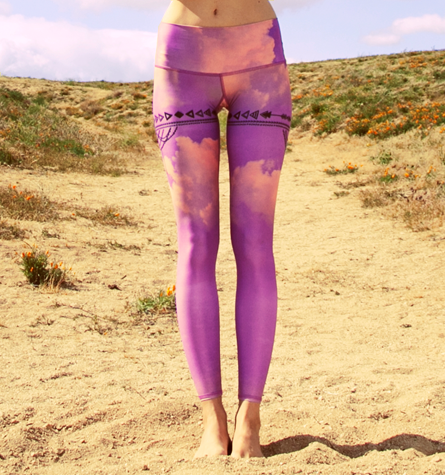
This is not the first time I've mentioned Teeki - and probably won't be the last. This activewear label pushes all the right buttons - recycles plastic into clothing, creates some of the hottest prints and designs I've ever seen on yoga pants, uses Zero Waste printing technology, and celebrates health, the environment and self-love.


Thank you Teeki!


* * * *

So now there is even more you can do to help with our global plastic problem. In addition to saying no to plastic bags, using a refillable water bottle and recycling all your household plastic, now you can also take some of that plastic back out of the oceans and landfill with some eco-conscious choices. And maybe just make plastic fantastic, again.

* * * *

Why is it a love-hate relationship with plastic?

I love my lipstick tubes. I love the convenience of my click-and-seal food containers. I love the sleekness of my computer-mouse. I know this shiny, flexible material has made our lives safer through medical supplies. Once you start looking around, you can see how much plastic is part of our daily lives and instances where it has, in fact, improved our way of life.

But our reliance on this petrochemical-based material has gone too far. And I hate the environmental damage caused by our irresponsible use of plastic.  Just a few stats:
Between convenience packaging, poor recycling rates, and fishing lines and nets being discarded, plastic has taken over our land and our water, and it's impacted us all. So please, start taking action today.

Sunday, 16 March 2014

a green iPad fling

Okay, I admit it: I'm an Apple fangirl.

I'm writing this on my iMac,  and around my home is a collection of iPhones, iPods and a MacBook. And after showing much restraint, I finally got my first iPad. Actually, Santa left it for me under the tree this Christmas, knowing it would come in handy as I balance work, study and a start-up this year.

This isn't just any iPad, though, it's a green one - Santa knew I'd prefer something used, so he let the elves off the hook and bought it on Gumtree.


 To keep this a green iPad, I've just ordered a used keyboard from eBay . . .


. . . as well as a handmade cover from Etsy.


E-Waste is a growing concern across the globe.

Did you know that Australians buy more than 4 million computers per year? And less than 10% of discarded computers get recycled. This is a problem in terms of wasting energy-intensive resources that go into computers, and the potential leaking of mercury, lead and other toxic chemicals from discarded e-waste.

Apple frequently gets a large portion of the e-waste blame as each iteration of the iPhone and iPad seems to come out quicker than the last. And personally I'm not impressed that the batteries of the devices can't currently be replaced (I haven't faced this problem myself, but this seems to me to be a major design flaw).

But we need to take personal responsibility for how many new devices we buy, as well. So, if you're in the market, I suggest you consider secondhand for your next computer, phone or tablet. You'll probably be surprised at the condition, and the quality of Apple products mean they should last for years to come. (The iMac I'm working on is now 6 and a half years old and still going strong

And when it comes time to farewell your next piece of technology, make sure to dispose of it properly. Donate it, sell it, or recycle it.  It's easy enough to recycle if you know when your local council e-waste collection is, or you can take it to various recycling centres or organise your own pick up. Check out the sites below for assistance in responsibly disposing of your old computers, devices, televisions and other bits of e-waste.

Australia
1800 EWaste
SITA
Kimbriki

America
EPA

Tuesday, 26 July 2011

a green iPhone fling

So far I've resisted upgrading to the iPhone 4.  My current iPhone was less than a year old when the new version came out, so in the spirit of 'de-materialisation' (translation: buying only what I need), I've stayed strong.  After all, about 70% of all metal waste is from e-waste, in the US anyway, and I don't want to add to the problem (of course I'd recycle my phone when the time came - but reduce first, right?)

I even stayed strong after dropping my iPhone one too many times, and a tiny crack appeared in the base; instead I decided it was time to get an iPhone cover, so I began researching eco-friendly covers.

If I had an iPhone 4 I would absolutely purchase a gorgeous, artistically designed bamboo cover like this one by Grove.
Birdland

Isn't is divine?! Sadly they don't make them for iPhone 3 anymore.  I'm devastated. 

Instead I bought an Incase Bamboo slider made from 40% reclaimed bamboo shards - this means the bamboo pieces are being saved from the landfill and protecting my iPhone at the same time. Love it!


Like Grove, Incase appears to have discontinued iPhone 3 covers, but I found some on eBay and promptly ordered one in Eggplant.

I didn't think I'd like having a cover on my phone, I've always loved the sleekness of the original design. But when I hold it in my hand and feel the tiny bamboo pieces I'm reminded that I've done the best thing for the environment.  Actually, it's sort of like having a whole new phone after all - a fantastic fix for this still-recovering shopping addict!

Thursday, 21 July 2011

a green reading fling

My book club meets in a couple weeks time and we're reading The Help.  

Never one to miss an environmental opportunity, I've made my hunt for this book as green as possible, but I'm hitting some roadblocks.

In an attempt to reduce my consumption of new products, I tried to borrow the book, checking the library first.  Unfortunately The Help is too popular, and between my two libraries there are nine copies out and all are on reserve when they get returned. I also asked my usual book-lender, Erica, but her copy is with someone else right now.

My next preference was reuse, but when I checked my local secondhand book shops last week they, too, were out of the book.  It better live up to the hype after all this 'shopping' around!


Photo credit Maggie Smith
I haven't yet made the leap to e-readers.

Truthfully, I'm not thrilled at the prospect of staring at yet another screen; I already look at screens for 10 hours a day, my eyes prefer the comfort of paper pages for my leisurely reading.

I'm also not convinced they are better for the environment.  An Op-Ed piece in the New York Times last year considered the life-cycle assessment of e-readers versus paper books and revealed that:
With respect to fossil fuels, water use and mineral consumption, the impact of one e-reader payback equals roughly 40 to 50 books. When it comes to global warming, though, it’s 100 books; with human health consequences, it’s somewhere in between.
All in all, the most ecologically virtuous way to read a book starts by walking to your local library. (Daniel Goleman and Gregory Norris)
New versions of e-readers (be they Kindles, iPads or others) come out all the time, so readers must consider if they'd really have purchased that many new books in the time frame they own the e-reader before upgrading to a newer version.  For me, the answer is no; it would take me years to buy that many new books. For now I'm content with my library cards and secondhand shops, and the occasional new book.

I still don't want to buy The Help brand new, though, so if anyone has a copy to lend me please let me know - I promise to take very good care of it!