Recently I contributed to a new website, Fire Feels: Telling politicians how we feel about the 2019/2020 bushfiresI heard about the site from one of the founders (and my colleague!) who led a climate grief workshop last month.
This important site was created in the wake of this summer's horrific fires as a means of communicating your grief, rage, horror and shock to our politicians. It actually originated between two friends writing to one another about how they were feeling, and then realising that our politicians - the ones who have the power to make the dramatic, systemic changes we need to decarbonise and to value nature - should hear how we feel. Instead of 'staying calm', we should tell them how we feel.
So without further ado, below is the letter I wrote to my MP, Zali Steggall
To Zali Steggall: I had hoped never to experience this fear and grief
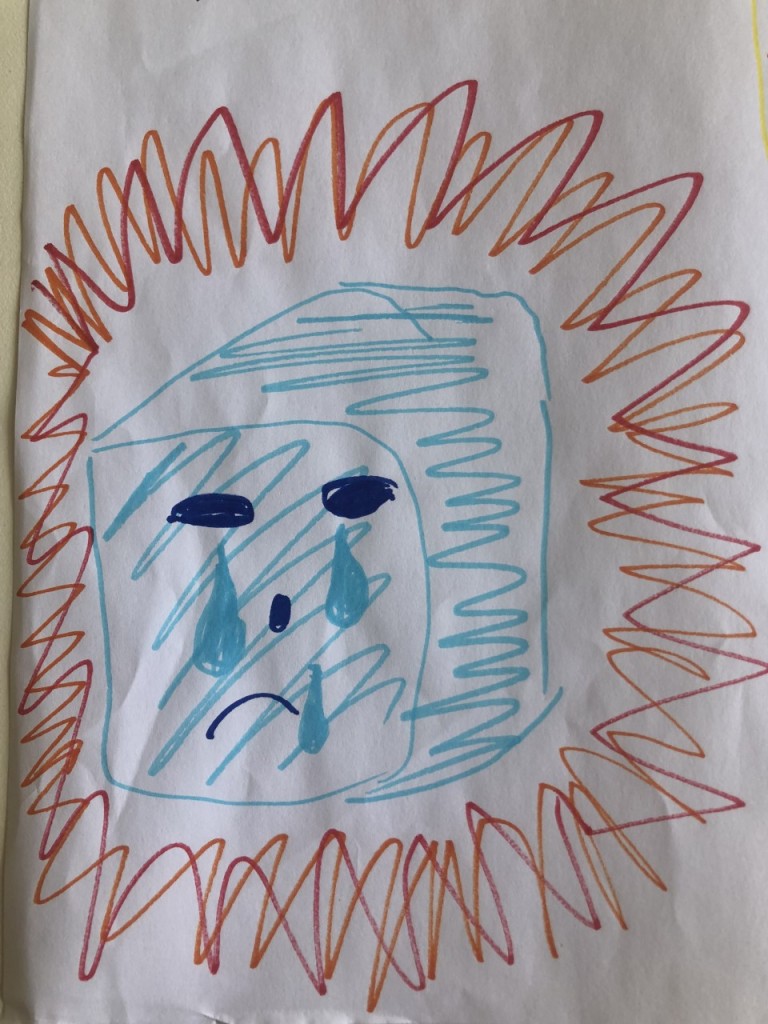
I have been a climate activist and working in sustainable development for over a decade. The scenes from the bush fires have brought out fear and grief that I had been hoping never to experience – and fighting for others not to experience – for so many years. I attended a climate grief workshop to help me start to address these feelings, during which I drew the following two pictures.
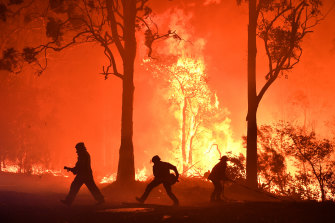
One is the scene I just can’t get out of my head of standing on a fairly isolated beach in Broken Bay with my two year-old son as the sky was golden-orange and ash-flakes snowed down upon us. There were children in the water who were laughing and playing, trying to catch the ashes with a goal of catching the biggest one possible. Did they know what it was? It was a very apocalyptic scene. It was very hard to accept that it was really happening, and we were not even in the worst of the fire zones.
The other is a representation of how I feel – sad and frozen, but also angry. I’m just waiting for that anger to thaw me out of my frozen state so I can start flowing and acting (and activisting!) again.
I know that you are committed to climate action, I voted and campaigned for you because of it. I am writing to remind you of how urgently Australia needs to take bold action. I will stand behind your climate efforts, but also push you for more brave and robust efforts for the sake of the future and younger generations.
I still wholeheartedly believe in those options. And - despite what the rest of this post may suggest - I really do love the holiday season. Love it. There is nothing better than enjoying delicious food and the company of loved ones under the twinkle of fairy lights. As an added bonus, living in Sydney means that Christmas is the perfect excuse for an extended summer break at the beach. Bring. It. On.
But this year, instead of hoping santa brings me a gorgeous sustainable frock and fretting over the 'perfect' gift for my loved ones, I want something bigger. I want a revolution. I want a seismic cultural and political shift to address the growing climate crisis. It's not too much to ask, is it?
My state is literally on fire. Look at these photos. That extended summer break I mentioned before will likely be spent indoors to escape the hazardous smoke pollution which periodically blankets the city. The fires have come so early and so fiercely that fire chiefs are making public declarations about climate change and begging the government to address the climate crisis. And what does our Prime Minister do? Offers platitudes, thoughts & prayers, naively comments that volunteer firefighters don't need to be paid becausethey "want to be there" and uses the opportunity of our nationwide distraction to axe the federal arts department and splitting the energy and environment portfolios into other, larger, portfolios, all but ensuring climate change doesn't get a look in. Shame.
Halfway around the world other world leaders are meeting for the annual COP climate talks. I freely admit to being particularly ambivalent about the talks this year. Which is unfair - many people work tirelessly in the lead up and throughout the talks to convince nations to make binding agreements to emissions reductions. But from my perspective (and at least one top scientist) it just looks like we've had these talks for over 20 years and global emissions are rising year on year. Countries including Australia and the United States shirk responsibility and forfeit the opportunity to become climate leaders. And remind me, how many people took an international flight (and how many business class, or private planes) to attend the talks? Not Greta, obviously, and though it doesn't make a dent in the grand scheme of greenhouse gas emissions, it does have an impact on the power of one's activism and leads to systemic change.
So needless to say, this holiday season I'm distracted. Instead of teaching my toddler about the magic of the season I'm fretting about his future. I don't want the champagne and baubles and bonbons - well, not as much as I usually do, anyway. I don't have the energy to handcraft gifts and I don't feel the same joy listening to Mariah Carey's "Merry Christmas" album as in previous years. I want global leaders to act just as that - leaders - and to take the bold actions necessary to halt the worst of the project climate disasters. We are seeing too frequent glimpses of them already, and frankly, it's terrifying.
But I hear you. You want a list. You want a guide for an ethical holiday season, so here it is:
Change your household energy to 100% renewable energy. There are multiple affordable options available making this option more attainable than ever.
Divest your retirement/superannuation. There are a variety of funds options that do not invest in fossil fuel companies but do have competitive returns. Make your money work for the future you want.
Ask your workplace about their own energy and investment plans, and work with them to make the necessary changes if not enough is being done.
Contact your politicians. Relentlessly. Let them know the climate is a top concern of yours, and if it's not theirs they will not get your vote.
Volunteer your time.
Donate your money. This year there are a variety of bushfire appeals including for Fire Services and wildlife rehabilitation. If any of my loved ones want to know what to get me, please do this for me.
Connect with others. Build your community and look after those who need some extra care.
Rest as much as you can, we have a lot of work to do in 2020.
I'm taking a serious turn in this blog post to talk about the grief, anxiety and apathy that can accompany environmentalism. It can come about from working in the area or as a result of hearing endless news reports about the climate, drought, rising sea levels, deforestation, you name it. It is sometimes referred to as ecological grief or environmental melancholia.
Good times at the beach?
This post has been on my mind for awhile, and though I'm sure I won't communicate everything I want to about it, I figured I may as well just dive in and get the conversation moving.
For example, I started writing a post in January (and because of working-motherhood never returned to), and it included the following:
As I've awakened on another steamy Sydney morning, during this summer of record-breaking heatwaves, I find myself thinking about the future. As a climate activist it's hard not to make the connection between these extreme weather events and our changing climate. Not to sound too apocalyptic or anything, but the early stages that climate experts have been warning about for decades are starting to occur.
I've also started working on a new project with the Sydney Environment Institute and speaking with a number of sustainability researchers from all faculties on campus. Normally talking to brilliant minds who are furiously working on climate and environmental issues energises me. But every now and then I realise, some of these people have been working on this stuff for decades.And we are still in a global political stalemate over concrete and revolutionary action (and it's only revolutionary because we have waited for decades to extricate our lifestyles from fossil fuels after learning of their impact - don't even get me started on that issue).
Oh yeah, the latest UN IPCC report was a real doozy, too. Did you miss it? The key takeaway is that we need to enact swift and immediate action to avoid catastrophe. We will reach a world of 1.5 degrees warming in 12 years (we've already reached 1 degree), at which point several hundred million human lives are at stake. I've taken the following from Grist:
We only have a decade left to finish our initial coordinated retooling of society to tackle this challenge. The scientists were quite clear about this. By 2030, we’ll need to have already cut global emissions in half (45 percent below 2010 levels, according to the report), which (again, according to the IPCC) would require “rapid and far-reaching transitions” in “all aspects of society.”
The language in this report is markedly more urgent than anything they've published before, which should highlight the gravity of the issues.
And then last night I was playing with my son at the beach, and as he was being adorable, crawling about on the sand, exploring the seashore, he made his way to give me something - a little styrofoam ball. How depressing. Is it human nature to clean up the planet? Or, more likely, he's watched his dad and I religiously take 3 (or 12) for the sea every time we are at the beach. This is something I wish I didn't have to teach my son, to clean up polluting litter from the beach and oceans. Let alone what's to come as the climate continues to change throughout his life (I must blog another time about the decision to procreate in a time of climate crisis).
So there you have it. Some of the causes of my current state of environmental melancholia. I have started reading a book of that same title by the very clever psychologist Renee Lertzman, and will give you a mini book review in the next post. I'll also share insights from other experts in the area, in case you have also experienced similar feelings of grief or anxiety.
As environmentalists or activists or simply humans living in this changing world, it is important to look after ourselves, acknowledge our emotions, and learn how to help each other move forward, don't you think?
If you've read my book you'll know that the Manly Food Co-op and I got off to a rocky start. What is up with all these bins? Am I really meant to bring my own containers? What do all the different prices mean? And how much did I just spend on olive oil (while distracted from the beautiful Brazilian checkout boy)?
Fast forward 8 years and I am a Manly Food Co-op pro (it helps that it moved to a larger, brighter, swankier space). My husband and I can collect our containers from home and do a "big shop" in about an hour - including getting all the beautiful organic, local, packaging-free ingredients for two flavours of homemade muesli, stocking up on pantry essentials like rice, legumes, and nuts, and gathering whatever produce strikes our fancy. Ty has volunteered off and on over the years, and this year I've been volunteering as Director of Sustainability. We honestly don't know what our lives would be like without the Co-op.
Unfortunately we may soon face the reality of a life without the Co-op and the sense of community it brings us. The Manly Food Co-op is facing closure if we don't raise $50,000 (AUD) by 20 August. That's just over a week from now! The details of why we need that amount and what it will be used for are on the Pozible crowdfunding site, so I won't get into it here.
What I do want to say here is how important I think places like the Co-op are for building community and for offering the potential to radically change our food system.
When the Co-op was founded over 21 years ago by Keelah Lam and other local environmentals, they had a vision to offer clean, affordable food to the Manly community that was better for the planet and better for people's health. Those same values drive the Co-op today, and are as important as ever as governments and corporations seem hell bent on keeping polluting, wasteful practices as the norm. If you watched the War on Waste and saw the latest report about how some of our recyclables only get recycled 50% of the time you will know the importance of avoiding packaging in the first instance.
As we like to say at the Co-op, we never had to ban the plastic bag, because we never used it in the first place.
In addition to waste avoidance - and pollution avoidance (and health benefits) of buying organic - the community of the Co-op has enormous revolutionary potential. As I've been writing about in my thesis lately, the way to change practices (like grocery shopping) to be more sustainable is not to focus on individual behaviour change, but to focus on creating networks and building connections. Building networks provides emotional support, but also supports multiple ideas to come together to start to change the system itself, which then enables everyone to have a more sustainable shopping experience.
This week I've been blown away by the passion of the fundraising committee - including my husband. It seems I have fallen even more in love with him this week (had no idea that was possible!) as I've seen his fighting spirit come alive, and heard him speak with tenderness of the love he feels for the Co-op as he contacts some of the 600+ Co-op members to raise the funds to save the shop. In less than 2 days they have raised over $12,000. I have witnessed the power of community, the power of this network, as it is rallying together to save an institution they love.
If you are passionate about stopping food and packaging waste, supporting organic farming, and the idea of changing the food system to be more sustainable, equitable and healthy, can I ask you to do me a favour and donate to the Manly Food Co-op fundraising campaign? If you are a local, you can contribute while getting (or renewing) a membership, or take advantage of some awesome rewards (like a sailing excursion or a tour of Keelah's house and beehive!). If not, consider it a donation toward a space that is trying to set the standard for a new way of providing food.
Recently the Australian government asked for submissions addressing an inquiry into establishing a Modern Slavery Act in Australia (an act was established in the UK in 2015). At the suggestion of a fellow sustainable fashion activist, I submitted my response - this was a first for me! I have never made a Parliamentary submission before, but I felt it was the perfect opportunity to flex some civic engagement muscle on a topic I know and care about.
The submissions have all been posted online now, and you can view each of them here. It's great to see submissions of support from global brands like Adidas and Wesfarmers, as well as from concerned citizens and fashion design students. I haven't read all the submissions, but I was heartened to see so much support for this important issue.
Modern Slavery exists in a multitude of forms, and is by no means only connected to the fashion industry, but that was the focus of my (admittedly hastily written!) submission. You can read my response below. Let me know what you think, and if you've ever written one of these!
* * * *
To the Committee Secretary:
Introduction
I am an ethical fashion advocate and a PhD candidate at the University of Sydney, and I am pleased to make a submission to the Senate inquiry into modern slavery. I am currently completing research on Australia’s fashion industry and the challenges facing companies and consumers in the endeavour to create a more sustainable/ethical fashion industry, including the particular significance of transparent supply chains. I welcome this inquiry and support the idea of creating a Modern Slavery Act in Australia.
Nature and extent of modern slavery
Significant research is required to determine the nature and extent of modern slavery in Australia and globally. Statistics on this issue are difficult to come by and definitions are often vague. According to the Global Slavery Index, 36 million people live in modern slavery, and many of them work throughout the supply chain of brands bought in Australia. In terms of the textile and apparel industry, a number of organisations are working to determine the extent of the issue and taking action when possible. These organisations include Baptist World Aid Australia, Clean Clothes Campaign, Fair Wear Foundation, Labour Behind the Label, Oxfam, Stop the Traffic, and Fashion Revolution.
Supply chains
I will specifically speak to the textile and apparel industries in this section. The majority of companies have very little information on the specifics of their supply chain, particularly when it comes to their Tier 2 and Tier 3 suppliers. Most notably, child and forced labour has been reported widely throughout cotton agricultural production. Until recent years (as a result of increased activist pressure following the 2013 Rana Plaza factory collapse in Bangladesh), most companies had little information on their Tier 1 suppliers, either. When companies are not required to know the full story of their supply chain, decisions often come down to the financial bottom line and aesthetic preferences. At this time, Australian consumers have little opportunity to “choose ethical” products, or feel confident they are not supporting unethical practices such as modern slavery, because the companies offering goods do not know and/or share the details of the supply chain. As a result, Australia is complicit in any multitude of modern slavery activities through the suppliers of companies in operation in Australia.
Identifying international best practice
Pursuant to the above sections, Australia should identify best practice employed by governments and organisations to prevent modern slavery throughout supply chains. In addition to learning from the UK’s Modern Slavery Act, there are a number of apparel companies leading the way in transparency throughout their supply chain including Patagonia, Honest By, People Tree, ALAS, Kowtow, Levi’s, H&M and Zara, to name a few. Organisations Fashion Revolution and Baptist World Aid Australia (via their Ethical Fashion Report) have developed some guidelines for measuring transparency throughout apparel supply chains. However, some of these only examine Tier 1 suppliers, and there is room for improvement to establish full examinations of Tier 2 and Tier 3 suppliers.
Conclusion
Australia has a moral imperative to work to end modern slavery, and Australian citizens have a right to buy goods from companies working in Australia without wondering if their purchase supported modern slavery here or abroad. In light of these facts I fully support the creation of a Modern Slavery Act in Australia.
It is hard to believe that it's been four years since the devastating Rana Plaza collapse in Bangladesh that sparked a Fashion Revolution. On that day, over 1,100 garment workers were killed and more than 2,500 injured in a completely preventable disaster. And it's essential that we're clear on the fact that this devastation was a direct result of changes in our fashion production system that demand ever-faster production at ever-lower prices.
There remains so much work to do to make sure this doesn't happen again, to ensure that no one has to put her or his life at risk so I can feel great in beautiful clothing. But today I want to focus on some of the positive changes I've seen since the global Fashion Revolution campaign began.
I must admit, I haven't been able to participate in nearly as many events this year as I would like to - I am definitely placing most of the blame on my PhD (getting so close!), but some of it on the fact that this year, in Sydney, there were so many events to choose from! Amazing work, Sydneysiders! There have been lectures, panel discussions, film screenings, clothes swaps and even a yoga session.
I participated in two events this week - one was a panel discussion/cocktail event at the beautiful Darley Store with my friend and fellow sustainable fashion advocate Carlie Ballard and designer Hang Osment-Le from the beautiful label All the Wild Roses.
We talked about why we each got involved in the movement, the challenges of being a sustainable or ethical fashion designer, the things that keep us up at night, and the things that inspire us. The crowd was a delightful mixture of fellow advocates, designers and interested fashion lovers and citizens. We even had some guests brave the icy wind all the way from Wolli Creek - you are amazing.
Incredible ethical Gin Gin Mules, made with Fair Gin and Fair gingerale c/o Noble Spirits.
Last night I hosted a "Who Made My Clothes?" workshop with Willoughby City Council, and was delighted to be joined by the dynamic duo behind the Possibility Project and Slumwear 108, who spoke about the power of working from a place of gratitude and belief that we each have the power to change the world. By the end of the evening we had guests learning to use the Good On You app, checking out the Project Just website, debating some of the grades of labels in the latest Ethical Fashion Report, and helping one another think about the clothes we wear each day.
The gorgeous Possibility Project women (Kim far left, Kath far right) with The Only Way is Op blogger/Instagrammer extraordinaire, Ellen.
A real highlight for me was seeing a guest who had attended a previous event I hosted with Willoughby City Council - she brought her teenage daughter along (who Instagrammed the event - thank you for spreading the word about sustainable fashion!), and also told me that after attending the previous event, she and a friend hosted a very successful clothes swap in their church. Fabulous!
I have been so fortunate to spend the past five years immersed in the world of sustainable and ethical fashion, and I can honestly say the tide is turning. More people are more engaged in the issues than ever before. Citizens are aware of what is happening and eager to play their part. Up and coming designers and design students are starting their labels with sustainable business models. Young people want to know how to get involved in activist work. Sustainable fashion entrepreneurs continue to trail-blaze paths toward ethical production without ravaging the planet's resources to make their beautiful garments. And some of the big fashion players are taking truly revolutionary steps to change the way they make their clothes.
There are 7 billion solutions to our problems when we remember how powerful each of us are.
So I will leave you with that powerful message - it doesn't matter who you are, or where you are, or whether you are involved in the fashion industry or not. We can each help solve the issues of the world, we just have to get started. If you're not sure how, you can start simply by taking a photo of yourself today, sharing it Instagram, tagging the company that made your clothes and include the hashtag #WhoMadeMyClothes?
Some of the fabulous guests last night - one who told me she was "proud of me", even though she knew how odd that sounded since she doesn't know me - I love it! I'm proud of you for coming along :) And another who is working on a denim upcycling project, can't wait to see her creations come to life.
Not on Instagram? No problem. Call or email the company instead. The more we ask, the more they'll change, it's as simple as that.
Today I'm celebrating International Women's Day not by going on strike, but by spreading the news about women around the world who would really benefit from a fairer fashion industry.
Did you know that around 85% of all garment workers are women?*
The majority of workers killed in the deadly Rana Plaza collapse were women, and most homeworkers are also women - typically sewing at home while also raising children. There have been reports of some garment factories requiring female employees to take oral contraceptives to guarantee their workforce, and according to the ILO, there is a significant wage gap in Asia's textile trade (where most of our clothing is currently produced), with two of the highest being Pakistan and India where women earn 48% and 39% less than men, respectively.**
Throughout the rag trade women hold overwhelmingly more positions than men though, like other industries, it's common to find men atop the highest paid list. According to Forbes, the 10 wealthiest people in fashion are all men, including the world's second richest person, Amancio Ortega, who owns Zara.
The World Economic Forum does not expect the gender pay gap to close until 2186 if current trends are maintained. I don't know about you, but the idea of equal pay for equal work is fairly elementary. The issue of parity is one that needs our full attention, both at home and abroad, and fashion industry is a prime target for improvement.
So what can you do to embrace this year's International Women's Day theme of #BeBoldForChange?
You can demand fair treatment and gender parity (in terms of pay and opportunity) from the brands you buy. Fashion Revolution Week is coming up next month, which is a great opportunity to ask #WhoMadeMyClothes? But why wait until then? Contact your favourite fashion label today to talk about the women in their business.
Support labels that are already choosing producers that empower females. Australian labels Carlie Ballard and Cloth & Co are two of my favourites that work with women in India to create beautiful, handwoven garments, and give women opportunities not often found in other workshops/factories (like the female tailor in the workshop that makes Ballard's pieces!).
Head over to the Project Just website and download the Good On You app to see how your favourite brands rank on ethics. Though they don't always go into the level of detail of gender pay, it's a start, and you'll discover some great labels that are well on the way to being safer, cleaner and fairer places to work.
However you acknowledge International Women's Day, let's support one another today. Only by joining forces and working together toward a common goal can we hope to smash that 2186 estimate and create a better world for all women and girls.
xxLisa
* * * *
*From The True Cost. These statistics are notoriously difficult to pin down because of the unregulated and undocumented nature of many clothing factories.
** This is a very complex subject, and I have pulled out the two highest, but I urge you to read the report to get a fuller understanding of how issues of marital status, education, and age all play a part in this gap.
My husband sweetly consoled me as we said goodbye today: "I'm feeling sad, too, but not as viscerally as you are." The non-writer in the family once again providing the words I could not find.
As I watched the electoral counts roll in yesterday I felt the wind knocked out of me. Every value I hold for equality, fairness and freedom - my supposed 'American idealism' - stomped into the deep red earth of my homeland.
As a female environmentalist and social justice activist I have always felt the Trump campaign hostile toward my entire being - in my body as a woman, and in my job as an activist (and I am a privileged white woman! I can't begin to understand how others feel). He is the embodiment of the dying patriarchal hyper-capitalist world that must end if we are to survive, and he went kicking and screaming through the end of the campaign to hold on to this 'power' for a little bit longer. As the results were finalised I felt knocked to the ground.
I just kept thinking, "What do I do now?" with a US President who is a climate denialist? There is so much work to be done. So much more work than I'd even imagined.
But even while mourning, I felt enraged as well.
In the midst of my despair I attended an event I'd previously booked featuring my hero, Naomi Klein. From her books No Logo and Shock Doctrine, to her recent work on Capitalism vs the Climate, she's long offered me new ways of addressing some of the problems I see in the world. She pointed out that the election was the result of a system in collapse. The neoliberal system has failed too many people, and we see the effects through this election, Brexit, and even the GFC in 2008. And if we don't fill it with something that people can believe in, fascism will fill that void.
She also reminded us that we must dust ourselves off, gather, communicate and organise. This is our opportunity to halt not just the climate crisis but so many global injustices that become more apparent with the effects of climate change.
The event also featured a panel of inspiring and committed women working in the field, including Maria Tiimon Chi-Fang, a woman from Kiribati who spoke of the impending loss of her culture, her people and her identity along with their land should climate change continue to go unchecked. We also heard from Murrawah Johnson, a Wirdi woman and spokesperson for the Wangan & Jagalingou Traditional Owners Family Council, campaigning to stop the proposed Adani Carmichael coal mine. She also spoke passionately about the environmental movement as a fight for her life, her culture, Aboriginal survival.
The evening was a reminder that challenges can divide or unite us, and as the title of the evening suggests, "To change everything, we need everyone."
This is not the time to be afraid or to deepen divides. It is not the time to flee America or turn our backs on its people - my people. It is a time to come together, to talk, to listen, to really understand one another, so that we can continue the progress we've already made. The stakes are way too high to ignore it.
This morning, in the clear light of day, I am heartened by the fact that Hillary Clinton won the popular vote. And by the fact that I know people voted for Trump who do not agree with his misogyny, racism, bigotry, or climate denialism. I know that so many of my countrymen and women do believe we are stronger together, and hold similar values to my own.
So I'll mourn, but just briefly.
As I type this I'm already dusting myself off, drying my tears, and gathering strength for the fight ahead. It really is the fight of our lives. If you haven't been involved in the climate movement yet, we need you now more than ever. Every single day of the Trump presidency and the Republican-held Senate and (likely) Supreme Court, we have to fight harder than we ever have before. It's time for all of us to put our hearts, minds and bodies on the line to create the world we all believe is possible.
And this time, the system can keep its pantsuits. We'll win wearing whatever we damn well please.
My favourite fashion story this week is also my favourite political story - Pantsuit Nation.
Starting as a private Facebook group for Hillary Clinton supporters to share their stories and praise for their candidate during this deeply divisive campaign, popularity has exploded in the past couple of days - at the time of writing there were nearly 3 million members.
This morning as I completed my routine wakeup Facebook check, my heart swelled from reading voter stories.
Women in deeply 'red' districts proudly donning pantsuits (frequently with daughters-in-tow!) to vote for Clinton, commonly amidst jeers and negative comments from their fellow Americans.
My dear high school friend and her girls voting in California today. Loving ALL these pantsuits! (No jeers for her - that I know of!)
Dads for Clinton talking about their vision for a compassionate and fair future for their children.
Older women wearing white in honour of suffrage and all the women before them who could not imagine being able to vote for a female president.
Women who don't own suits borrowing their husbands' for the day.
Husbands wearing their wive's pantsuits to head to the polls.
A father honouring his daughter who died while serving in the military.
And story upon story upon story that remind me of the love and compassion I know resides in my fellow Americans.
My other dear high school friend (another Lisa!) on the left here, rocking her blazer and 'Pussy Grabs Back' t-shirt, just back from her weekend campaigning on the ground in Nevada. Rockstars!
Living abroad this election cycle has been especially difficult. There were many times I wanted to jump on a plane and campaign, door knock, anything to help Clinton win. I have friends who have gotten involved in the campaign, and I am so proud to know them. And I have been incredibly frustrated with the Australian media, which paints a picture of an America so divided that no one should want to live there.
But that's not the America I know.
Of course Americans have different views and opinions, and there are serious issues to be addressed by the next president, but we also value the right to free speech, the right to vote and to have a say more than any other country I know. That doesn't make us divisive, it makes us diverse.
Stories on Pantsuit Nation and the love that filled my facebook feed today remind me of my America, in all her beautiful, diverse, and caring glory. I'm confident we will see this love reflected in polls today. And if for some reason it's not, I still know that it's there.
I voted weeks ago, but today I'm still pulling out a pantsuit. Sustainable, of course. Organic cotton blouse and black blazer by KITX, blue Veronika Main trouses, which are ECA-accredited. You can't see my secondhand black loafers, but if you look closely on my phone-holding hand, you'll see two rings - wedding rings of my departed grandmothers. I don't know who they'd be voting for, but I suspect they'd both be thrilled to see a woman on the ballot.
As the title of this year's meeting - Hope in the Dark - suggests, we were coming together to consider some hard realities of the struggling climate movement and the role of activists to provide hope, and remain hopeful, for the public we regularly address.
There were a number of fascinating sessions on environmental justice and sustainability in everyday life (like food and shopping), and the panels included both activists and academics. A key aim of the day was to generate research questions for academics that would provide activists with knowledge they need to effectively campaign.
Aside from the wonderful ideas and debates that I heard, I was stunned to hear during the opening remarks that activists and academics rarely come together.
Really? I thought, truly perplexed.
I'm an academic (in-training, at least) and an activist, and I see the two roles as naturally co-existing. And I know a number of other academics who would also classify themselves as activists. My field was created to address issues of social justice - how are we not activists?
During the end-of-day networking drinks I spoke with a campaigner from a leading NGO who reiterated the differences, and suggested that many of the academics speaking at the event would not be able to help with her work. I thought otherwise, and suggested she consider one-on-one conversations with select academics to discuss her specific research needs.
Look, I get it. Sometimes when a 'non-academic' hears an academic presentation you feel like the person is speaking another language. Like many other professions there are particular norms of writing and presenting ideas in the world of academia (which I haven't quite got my head wrapped around yet, either!). But underneath it all, most researchers working in the fields of sustainability and the environmental humanities truly care about improving the state of the planet and its inhabitants.
So why this separation?
I could probably write a thesis on this subject, but since I have another one to worry about at the moment I'll stop here for now and state that I am proudly an activist and an academic. In my experience, the two roles feed off one another. Higher education opened my mind to issues in the world and spurred me toward activism. And working as an activist raised questions that I need answered to be more effective in my campaigning, leading me back into the hallowed halls of the sandstone institution.
For now I'll leave you with a few images that I regularly use in presentations in both my activism work and my academic work, which may give you additional food for thought about the need to transform the way we make and buy fashion.
Roughly 85% of people working in the fashion industry are women -
a feminist issue if I ever saw one! (Photo: Kowtow)
The UN and WHO estimate that up to 77 million people suffer
pesticide poisoning each year from non-organic cotton cultivation.
2.5 billion tons of wastewater are emitted annually in China alone -
a country that produces more than half of all global textiles.
As of 2005, the average American shopper was buying
69 new items of clothing each year.
See you somewhere along the campaign trail (or lecture theatre).
xLisa
This blog was written with my American readers in mind, though I suspect there is plenty of good stuff in here for all of you.
Harvesting Liberty is a short, 12-minute documentary, that tells the tale of the Growing Warriors organisation – consisting of farmers and veterans – and their campaign to the US federal government to amend restrictions to growing industrial hemp. It’s beautifully shot and directed, and I’d be hard pressed to find anyone not moved by this tale of love of land and love of country.
I hope you'll watch this clip, and then sign the petition that will be presented to Congress on the 4th of July asking them to legalise industrial hemp.
The documentary features a US flag created from the hemp that has been hand-processed (with the aid of a special tool purchased with a grant from sustainable pioneers, Patagonia), including hand-spun thread that has been naturally dyed, and hand-woven fabric, created with the help of Fibershed. The flag was made to signify the collective history and future of a people who are suffering a lost connection with the land, a loss of community and, as Mike Lewis of Growing Warriors says, “our sense of place”.
Photo credit: Donnie Hedden
It's highly likely the first American flags were made of hemp. This crop was mandated to be grown by all of Britain’s colonies at the time because of the multiple uses of the one plant. George Washington was known to extol the value of the crop, as was Thomas Jefferson who stated, “Hemp is of the first necessity to the wealth and protection of the country.”*
A closer look at the crop explains why this was considered a ‘wonder-plant’. As indicated in the below graphic this one plant can provide “food, feed, fiber and fuel”** It can be used to create fabric, of course, but also paper, ropes, building supplies, plastic-substitutes, and when eaten is an ideal source of omega-6 and omega-3. In addition, it’s incredibly healthy for the soil, as compared to cotton, corn, and other nutrient-depleting crops.
Despite the crop’s low concentrations of THC, which essentially eliminates the psychoactive potential of the plants, industrial hemp was included in the Controlled Substances Act of 1970 because of its relation to cannabis. Some states have allowed growth of the crop in recent years, and some states have legalized marijuana, but many farmers remain reluctant to grow industrial hemp because of lingering resistance from the Drug Enforcement Administration (DEA).
There is debate about whether it was the Controlled Substances Act or the onslaught of cheap synthetic materials that numbered industrial hemp’s days, however. Polyester and other fabrics were becoming widely available at that time in history, and they now make up approximately half of all textiles produced in the world. However, there is no doubt that hemp will play an important role in the shift to sustainable fashion. Already we’re seeing beautiful hemp-silk blends from the likes of KitX, and the durability of the fiber makes it ideal for denim, as seen with the Hemp Blue label (not to mention many products by Patagonia).
KitX Crushed Silk Hemp corset dress, Hemp Blue men's dark denim.
I’d urge you to watch this lovely film and sign the petition that will be presented to Congress on the 4th of July urging the federal legalisation of the cultivation of industrial hemp. It’s an ideal opportunity for US farmers and manufacturers to participate in the growing green economy, but also an important step toward thinking holistically about issues of sustainability and what it means to create opportunities for our fellow Americans that give back to, rather than take from, the earth.
As spoken by Mike Lewis of Growing Warriors:
In the end, there’s more than just fiber that tears and fades when you use cheap goods to hold things together.
U.S. veteran and Growing Warriors director Michael Lewis
with his hand-made hemp processing machine.
Photo credit: Donnie Hedden
* * * *
*I suspect that to some of you the use of the flag in this way could be construed as insincere or overly saccharine, but I must admit I was moved when listening to the story.
I also want to acknowledge that the colonisation and subsequent American Revolution were conducted at the heavy expense of America's First People, and as such am also weary of romanticising any non-indigenous groups of Americans when referring to American history. In addition, both Washington and Jefferson were known slave owners. It's a troubled history and I don't mean to gloss over it with this harkening back in time. I merely wish to suggest that the possibilities of this crop were relied upon by those who were establishing new settlements because it provided so much in one plant.